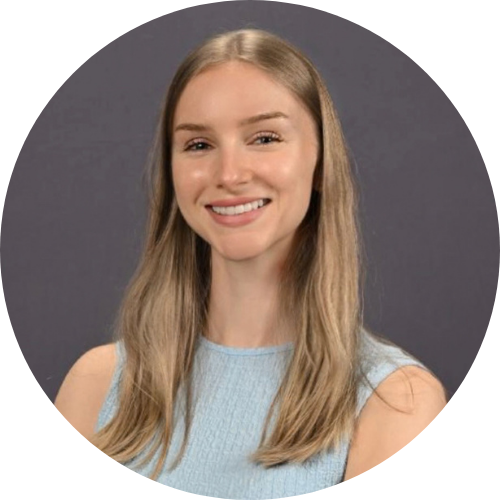
Meet BCPA’s 2026 Diversity Student Bursary Recipient, Elise Calene
“It Means a Lot to Be Seen”
Elise is a counselling psychology student, researcher, educator, and advocate whose work spans gender-based violence prevention, sexual violence support, and mental health. Behind this work is a personal journey shaped by experiences that are not always easy for others to see or understand.
As a neurodivergent and non-binary student who has faced significant financial barriers and survived gender-based violence, Elise describes the challenges of navigating academic and professional spaces while deciding what to disclose, when to ask for support, and how much of herself to make visible.
In this interview, she discusses these barriers, her work, and why recognition matters.
1. Congratulations on receiving the BCPA Diversity Student Bursary. What does it mean to you to be selected?
Receiving this bursary fills me with a really deep sense of gratitude. And honestly, a bit of sadness. It means a lot to be seen.
A lot of my journey through higher education has involved navigating identities that are often either concealable or invisible on their own, such as being neurodivergent, queer, a survivor of gender-based violence, and coming from a lower socioeconomic status (SES) background. Many of my struggles have gone unrecognised, even by myself at times.
So being selected is not only affirming of my work, but also of the experiences that have shaped me and my journey to get here. It also gives me a lot of hope for the field of counselling psychology, as it increasingly recognises diversity in its many forms, including those that are often overlooked in conversations about social justice and marginalisation.
2. What drew you to counselling psychology? Was there a particular experience, person, or moment that influenced your decision to enter the field?
As a neurodivergent child, I was very sensitive, especially to injustice. I asked a lot more questions about harmful societal norms around me, such as sexism and fatphobia. My first kind of sparked up was being interested in comparative sociology or cultural sociology to see if what I believe to be harmful, was malleable, like these beliefs.
This inspired me to apply for a scholarship, through the US Department of State to go to Germany for a year. It helped me to develop my ethical lens of the United States and gain a new perspective.
I then went on to university, majored in sociology, and minored in psychology. When I later learned about counselling psychology and theories like liberation psychology and feminist therapy, I was excited by the possibility of bringing sociology and my sociological imagination—the way society impacts individuals—together with counselling psychology.
3. What challenges have you faced throughout your studies, and how have disability, gender identity, and financial barriers shaped your academic journey?
Being disabled, non-binary, and facing financial barriers have shaped my academic journey in nearly every way.
Disability, in particular, has had a profound impact on my schooling. Internalised ableism that I've been fighting manifests itself as shame. Autistic individuals have what's called a spiky profile, where some skills we really excel at, while others require far more support than they might for a neurotypical person. For example, I'm able to be a PhD student. I can understand complex topics and conduct research, but I can't drive without having a panic attack. I struggle to make appointments on my own, and I really struggle in unstructured social situations that can help folks network and find opportunities.
I've had to really advocate for myself to receive accommodations, even with documentation, which many disabled folks aren't privileged enough to have because it's so inaccessible and expensive. And even with that documentation, I've received pushback because I don't look disabled. There's a double-bind situation where you have these support needs, but no one believes you, or you're afraid you'll be met with skepticism if you disclose.
So it's been an ongoing battle of masking to succeed, while trying to be authentic and vulnerable to increase disability visibility and rights.
Being non-binary and queer in the current sociopolitical environment is really scary, even in a field like higher education, where folks are usually a little bit more accepting.
I've felt that I've never been quite non-binary enough, but also never gender-conforming enough for anyone's liking, or fitting into the box of what people expect non-binary to look like.
Because there's so much privilege in sex-aligned presentations, even in higher education, at home or around friends, I feel more comfortable just being myself. But in professional spaces, I really feel this pressure to have a gendered performance that's associated with being professional.
And then, socioeconomic status was a huge barrier. I almost wasn't even able to go to undergraduate school because my family couldn't afford it. I worked 72-hour per week on night shifts at a lumber mill to pay for housing and living expenses and my master's degree.
4. What has studying psychology given you so far, personally, academically, or professionally?
Professionally, studying counselling psychology feels like it has given me the world. I feel deeply connected to my passions and values, and I have found ways to express them through teaching, helping, and research. I also get to meet individuals in the field from all over the world who have lived vastly different lives and have unique wisdom to share, yet somehow arrived at a shared desire to understand and support others.
Much of what I have learned in counselling psychology, through theory, research, and practice, has provided a form of hermeneutic justice, or the ability to interpret, name, and understand experiences that once felt confusing or isolating, from mental health challenges to oppressive norms embedded within culture and social institutions.
Now, I have the privilege of helping my students and clients do the same.
5. BCPA recognises the importance of creating change and established this bursary to support greater diversity in the psychology profession. What changes would you like to see to make the mental health system more accessible and equitable?
I believe that meaningful systemic change to the mental health system requires a certain amount of utopian thinking. The systems we have today were once ideas that seemed unrealistic, and if we limit ourselves to reforms that feel politically feasible within the current status quo, we also limit our ability to imagine transformative alternatives. If I could prioritise one structural change, it would be for British Columbia to treat mental health care as a right rather than a privilege.
I have been disappointed by how inaccessible long-term counselling can be in British Columbia, particularly for individuals living with complex trauma. Because much of counselling remains privately funded, access is often determined by financial resources.
The consequences extend beyond individual hardship. Free counselling organisations, including sexual violence centres, often face waitlists that stretch for years, preventing people from accessing support during critical windows of need. I believe expanding healthcare to include mental health would improve long-term well-being for communities, reduce the severity of crises, and ease pressure on nonprofit systems while ensuring that access to care is not gatekept by income.
6. You’re juggling 7 research projects, work, community involvement, and a doctorate at the same time. What does day-to-day life look like for you?
While I am really grateful and so happy with what I do, and that I've been able to get into this position, it is an unnecessary balancing act that I have to manage. The exploitation and lack of standardised pay for practicums and research lead to well over 60 to 70-hour workweeks for me.
As a person with a disability, I've definitely found the day-to-day of grad school very challenging. I spend most of my time on the computer, I don't celebrate holidays very often, etc. I'm currently a research assistant, so I do a lot of coding, meetings, interviews, and administrative tasks. I'm also a graduate assistant for a helping skills course, and I have a practicum at a sexual violence support centre right now. I'm just really glad that I love the work that I do and the advocacy that I do. It just takes a lot of time.
I hope that, in the future, there's going to be some reform for students in applied degree programs like counselling psychology, in a way that doesn't just push out folks from lower SES backgrounds by limiting the number of hours they can work to support themselves.
7. Looking back on your journey, is there anything you would have done differently? And what could institutions do to make the path more accessible for future students?
Looking back on my journey, I feel a lot of love and sadness towards my past self. I wouldn't wish that anyone would have to go through what I did to get here. At the same time, I feel that I didn't have a choice if I wanted to break out of intergenerational poverty and the intergenerational trauma that follows it.
What I think institutions could do to change things specifically around disability, is try to structure counselling programs through more neurodivergent-affirming lenses, all the way from undergrad to doctoral level, by asking who is our counselling program really built for?
The changes could involve identifying and valuing the strengths of autistic counsellors, and recognising that they could be amazing at filling this huge need and caring for autistic clients. Also by offering more scholarships for autistic adult students. The support for autistic students stops once they reach adulthood, and that might be the most critical time because they're then away from their parents and family, so they need a lot more support.
And then, for lower SES folks, I would say recognising it as a marginalised identity, and having this factored into the process of admitting students. How can we fight classism when we're so heavily gatekeeping those with low socioeconomic status through our requirements of achievements? Trying to get their basic needs met takes a lot of time away from being able to get those higher-level things that look good on a résumé.
And for gender diversity, I would say that there's a big need for universities to incorporate meaningful and comprehensive education on gender and sexuality into their curriculum. That means tying in intersectionality and the interconnectedness of oppression, and how transphobia and homophobia really tie back to the roots of colonialism.
BCPA Diversity Student Bursary 2026
Exclusive Student Membership Benefits
How to Become a Psychologist in British Columbia
Early Career Psychologists Series Presents: Career Day
Spotlight on Chantelle V. Jusay: A Passionate Advocate for Accessible Mental Health Services
Spotlight on Dr. Gloria Lee: Inspiring Growth, Connection, and Transformation in Psychology